


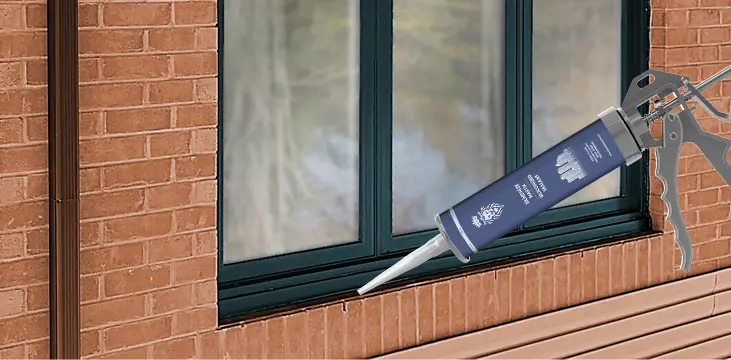
Siliconized Sealant Performance on Different Surfaces
Siliconized sealant is a flexible filling and sealing material widely used in the construction industry. Its compatibility and adhesion properties on a wide variety of surfaces make it a popular choice for both professionals and individual users. This article details how siliconized sealants perform on different surfaces, their durability, ideal application areas, and points to consider during application.
The Importance of Surface Performance in the Use of Siliconized Sealants
Regardless of the quality of a sealant product, its compatibility with the surface is a key determinant of performance. Some surfaces are more porous, others more slippery, and some are more flexible or harder. This causes siliconized sealants to behave differently on different surfaces. Without proper surface analysis, the sealant may develop problems such as cracking, blistering, loss of adhesion, or leakage over time.
1. Performance on Wooden Surfaces
Wood, by its very nature, is a mobile material. It expands and contracts depending on heat, humidity, and seasonal changes. Siliconized mastic has an elastic structure that can adapt to these movements of wooden surfaces. It is frequently used in wooden window frames, baseboard joints, door frames, and decorative panels.
- It adheres well to the surface energy of the wood.
- Thanks to its elastic structure, it does not crack.
- It provides filler without disrupting the natural appearance.
- It is resistant to humidity changes.
The most important point for wooden surfaces is that they are free of dust, sawdust, or resin, and must be completely dry. Otherwise, the sealant will not adhere properly to the surface, and separation may occur over time.
2. Performance on Concrete and Plaster Surfaces
Concrete and plaster surfaces have a porous structure. Therefore, siliconized mastic exhibits high adhesion to these surfaces. It is particularly preferred in door, wall, and window joints, and in crack filling applications.
- It adheres strongly to porous surfaces.
- Its high filling capacity is an advantage.
- It offers a long-term solution for plaster cracks.
However, if the concrete surface is newly poured, mastic application is not recommended due to the high moisture content. The surface must be completely dry. Excessive moisture can weaken the adhesion of the mastic.
3. Performance on Metal and Aluminum Surfaces
Metal surfaces are slippery and hard. Therefore, it is important that the chosen material adheres well to the metal surface. Siliconized sealants perform well on metal surfaces and are frequently used, especially in aluminum joinery applications.
- It provides strong adhesion even on slippery surfaces.
- It remains elastic against temperature changes.
- It forms a barrier that provides resistance to corrosion.
When applying sealant to metal surfaces, it is crucial that the surface is completely free of oil and dirt. Otherwise, the siliconized sealant will not adhere properly and may detach.
4. Performance on Glass Surfaces
Glass surfaces are quite slippery and difficult to adhere to. Siliconized sealant is one of the high-performance products for glass surfaces. It is particularly preferred in glass installations, frame joints, and decorative glass applications.
- It provides high adhesion to glass surfaces.
- Transparent options offer aesthetic appeal.
- It is resistant to UV rays.
In glass surface applications, particular attention should be paid to the presence or absence of water on the surface. Even the slightest moisture may prevent the sealant from adhering properly to the surface.
5. Performance on Ceramic and Tile Surfaces
Ceramic surfaces are glossy and have low absorbency. This can lead to adhesion problems with some sealants. Siliconized sealant, however, performs very well on such surfaces and is frequently used, especially in bathrooms, kitchens, and around sinks.
- Provides high grip on slippery surfaces.
- Its water-resistant structure is an advantage.
- It offers a long-lasting solution for wet areas.
One of the most common mistakes in ceramic applications is failing to remove soap residue from the surface. Such residue can prevent the sealant from adhering to the surface.
6. Performance on Plastic and PVC Surfaces
Due to their chemical composition, plastic surfaces can present adhesion difficulties to certain materials. Siliconized sealant, however, performs successfully on surfaces such as PVC.
- Provides excellent adhesion to lightweight surfaces.
- It is resistant to deformation.
- It is frequently preferred in PVC window frames and pipe connections.
Before applying any coating to PVC surfaces, it is important that the surface is cleaned thoroughly without detergent.
7. Performance on Stone and Marble Surfaces
Stone and marble surfaces are not excessively absorbent but have high structural strength. Siliconized sealant can be used on these surfaces for both filling and decorative purposes.
- It adheres well to the stone tissue.
- It leaves an aesthetically pleasing appearance on the surface.
- It is resistant to outdoor weather conditions.
When applying to marble surfaces, any remaining polish must be removed. Otherwise, the sealant may not adhere properly.
Factors Affecting Performance Based on Surface Types
The surface performance of siliconized sealants can vary depending on the following factors:
- Surface cleaning
- Humidity level
- Porosity level
- Surface temperature
- Application technique
- Using the correct amount of mastic
When these factors are taken into account, siliconized sealant can deliver high performance on almost any surface and provide a long-lasting solution.
Conclusion
Siliconized mastic is a flexible, long-lasting filling and sealing material that can be used on a wide variety of surfaces. Its high performance on wood, concrete, metal, glass, ceramic, PVC, and stone surfaces makes it widely used in the construction industry. With proper surface preparation and application techniques, durable results can be achieved for many years.
The information in this text may vary from time to time depending on the manufacturer. Always check the product label.


